
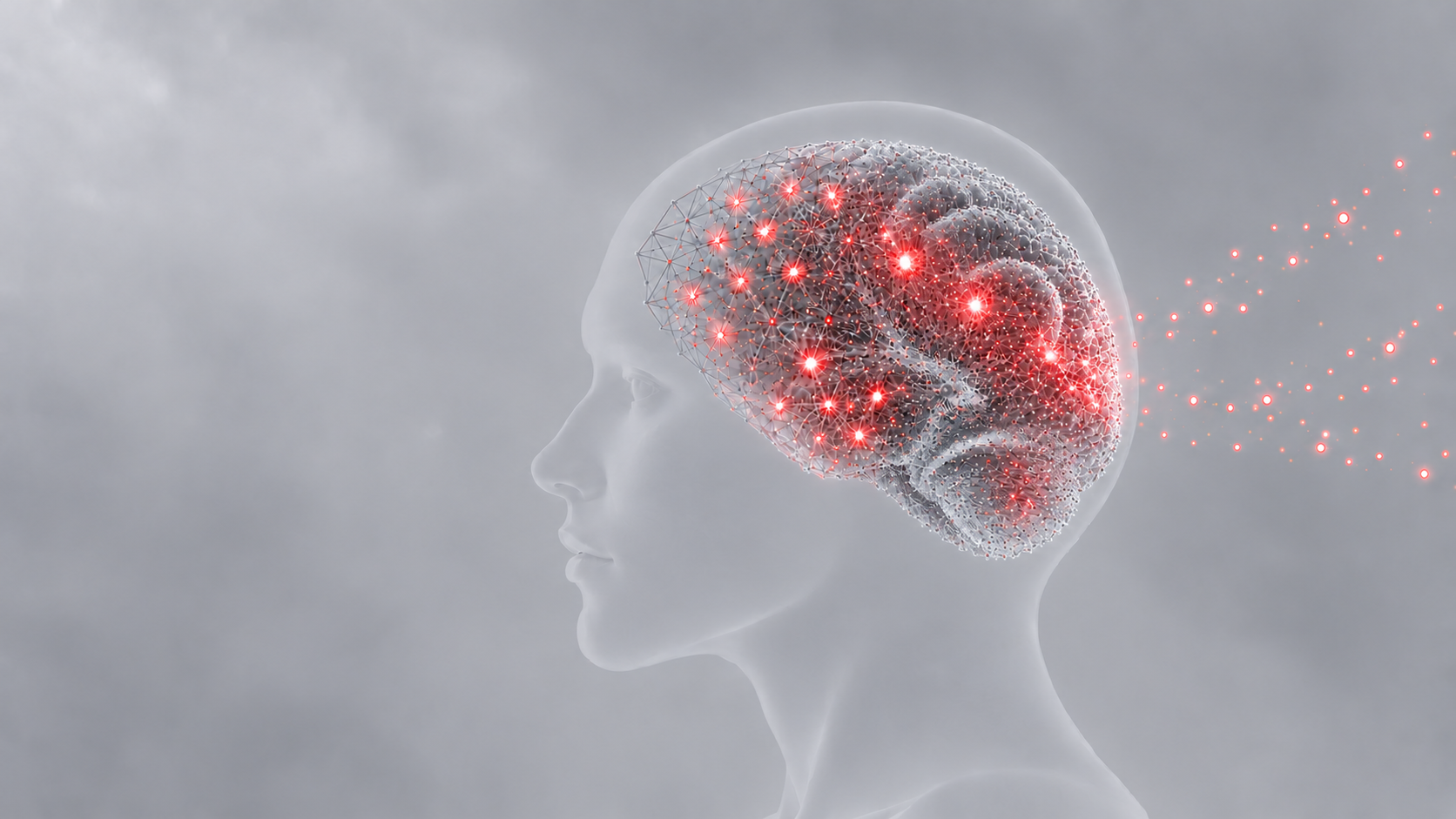
A faint human profile with a brain transitioning from fine triangular structures into airy neural points, illuminated by red optical light particles.
A clearer view of the brain

Unlocking
neuroscience.

Tools to understand the brain and help find treatments for neurodegenerative diseases.

Over

1 in 3

people globally live with a neurological condition

WHO · 2021 estimate

Worldwide

57 million

people living with dementia

WHO · 2021 estimate

The human cost

Behind every number,
a life changed.

Memory, movement, independence.
Understanding the brain matters.

Neuroscience, untethered

Natural behaviour.
Meaningful neural data.

Drug research into Alzheimer’s, Parkinson’s and other neurodegenerative diseases often begins with animal studies. Recordings from freely moving animals give researchers a clearer view of brain function during movement, exploration and interaction, helping guide the development of new treatments.

Reliable insights depend on devices that minimise their effect on behaviour. NeuroVLC combines a compact 1.4 cm³ headmount weighing ≤ 2.5 g with optical wireless transmission, preserving the full, uncompressed signal. High-quality recordings can reduce failed experiments and unnecessary repeats, saving time and research costs.

The drug development journey · FDA Meet the system
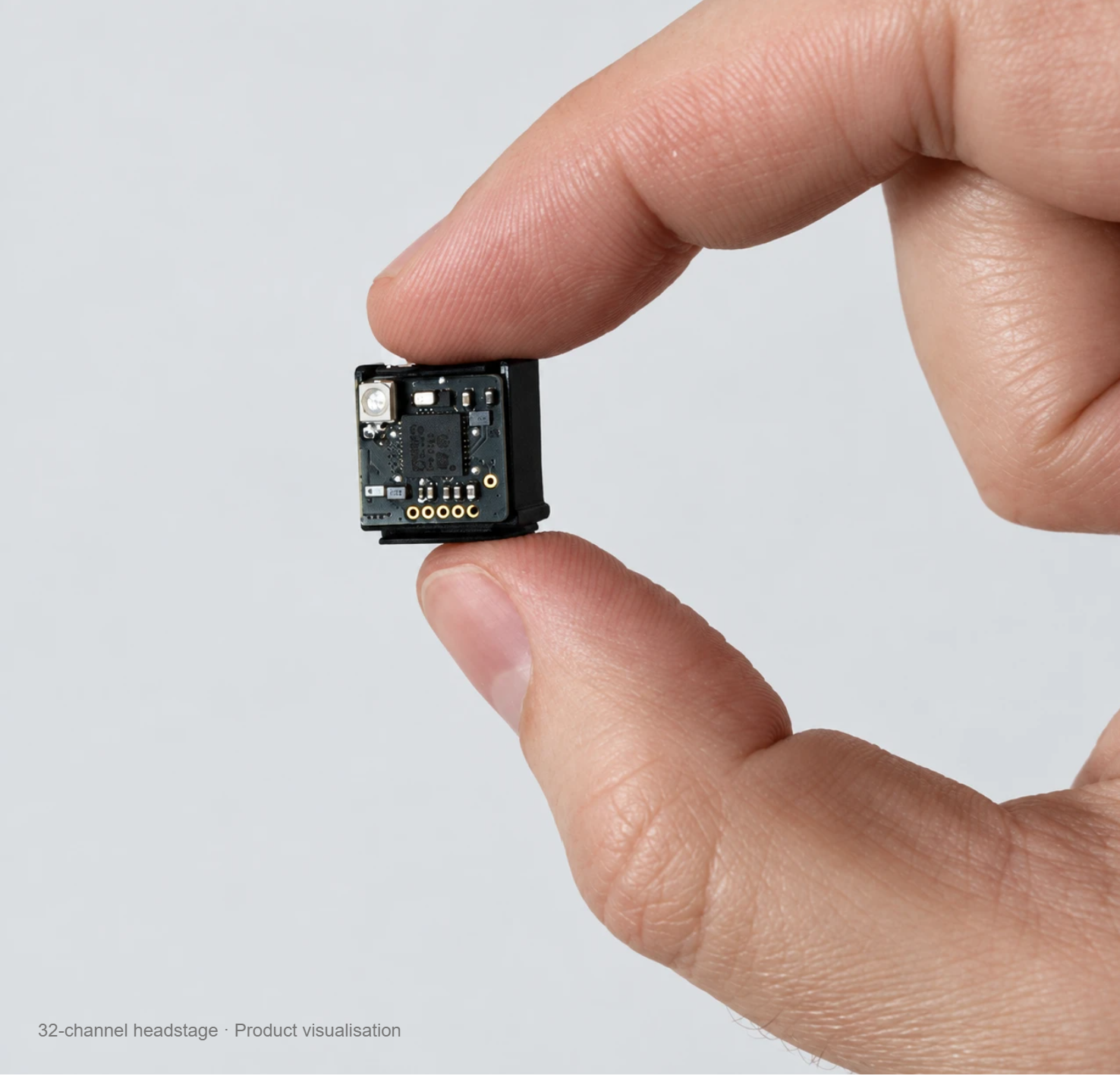
NeuroVLC headstage held between fingertips, in the supplied original orientation
1.4 cm³Device volume
≤ 2.5 gHeadmount weight
15.36 MbpsUncompressed neural data
01

≤ 2.5 g

A lightweight headmount for freely moving mouse research.

02

Connected by light.

An optical link carries neural data to a filtered detector above the enclosure.

03

Full signal. No compression.

Transmit uncompressed neural data at 15.36 Mbps, preserving access to the signal for your analysis.

From activity to understanding

A single observation can lead to new branches of discovery.

Every discovery begins with a closer look. Preserve the full signal, follow unexpected connections, and let the next question take shape.

Follow the signal
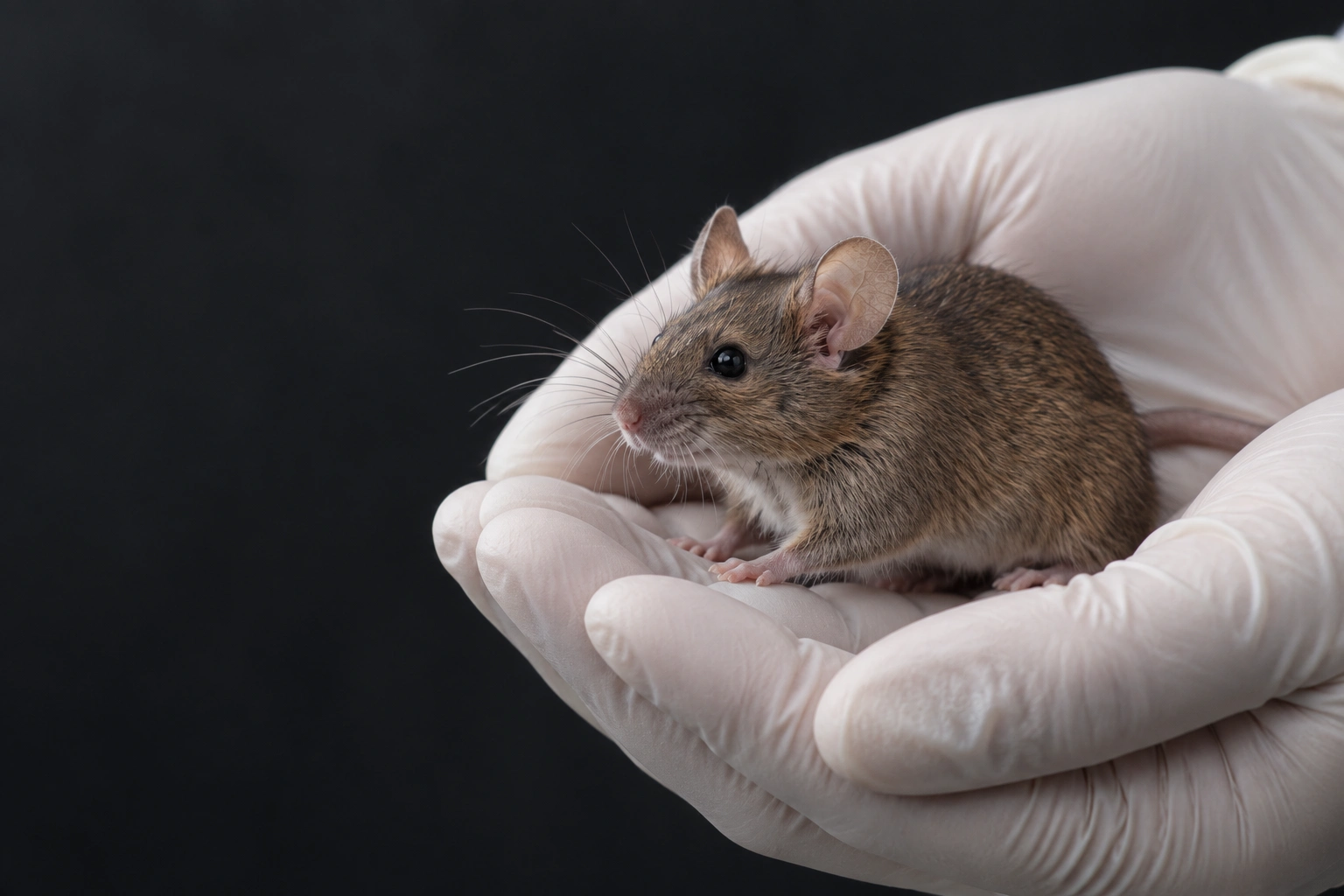
A brown mouse gently supported in a researcher’s gloved hands
Animal welfare

Less constraint.
More consideration.

A small interface should leave more room for natural behaviour.

Reducing device size and weight and removing a trailing recording cable are central to our approach. The aim is to support richer observation while giving animals more freedom to explore.

We design with refinement in mind and support the principles of replacement, reduction and refinement—the 3Rs.

Discuss your research
Start a conversation

What will you
discover next?

Let’s explore what optical wireless recording could make possible for your research.