
Smaller size,greater impact.

Explore the system

Wireless neural recording without compromise.

Research visualization
Discover NeuroVLC Engineered in Scotland
Neuroscience, untethered

Made small.
Designed to see more.
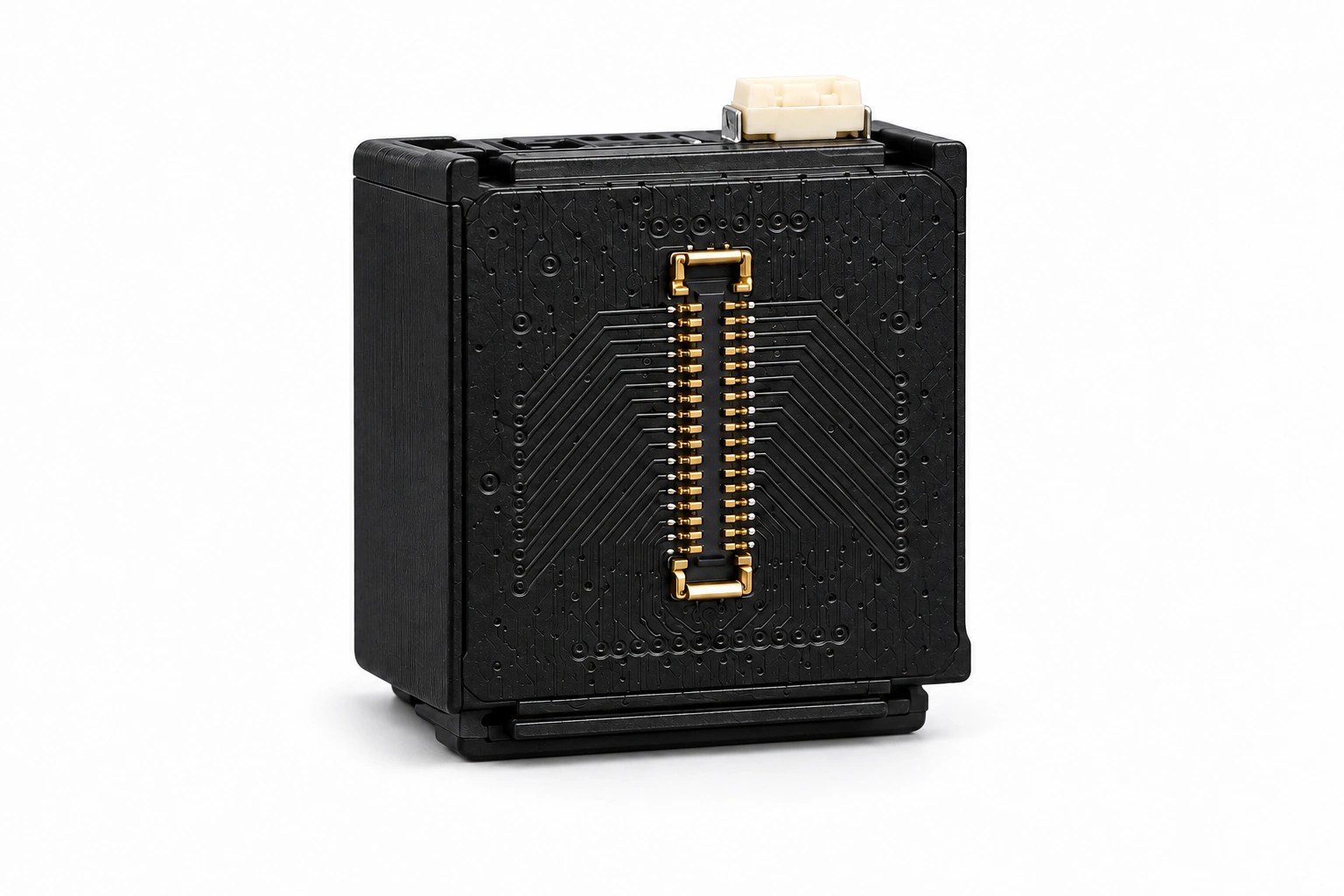
Rear Molex connector on the NeuroVLC headstage
Compact by design 13 mm13.5 mm

Headstage footprint

≤ 2.5 gHeadmount weight
1.4 cm³Device volume
15.36 MbpsUncompressed neural data
No compressionAccess to the full neural signal
01 / The headstage

Less to carry.
More to explore.

A miniature interface designed to acquire neural signals and transmit them using light, without a trailing recording cable or data compression. Molex and Omnetics interface options let you discuss the right configuration for your probe.

Follow the complete signal chain

Platform specifications

Headstage footprint13 mm × 13.5 mm
Headmount weight≤ 2.5 g
Device volume1.4 cm³
Neural data rate15.36 Mbps
Recording channels32
Sampling rate per channel30 kS/s
Data compressionNone — uncompressed transmission
Probe interface optionsMolex or Omnetics
Optical receiverIR-filtered receivers, configured for coverage
ConnectivityRed / infrared optical wireless
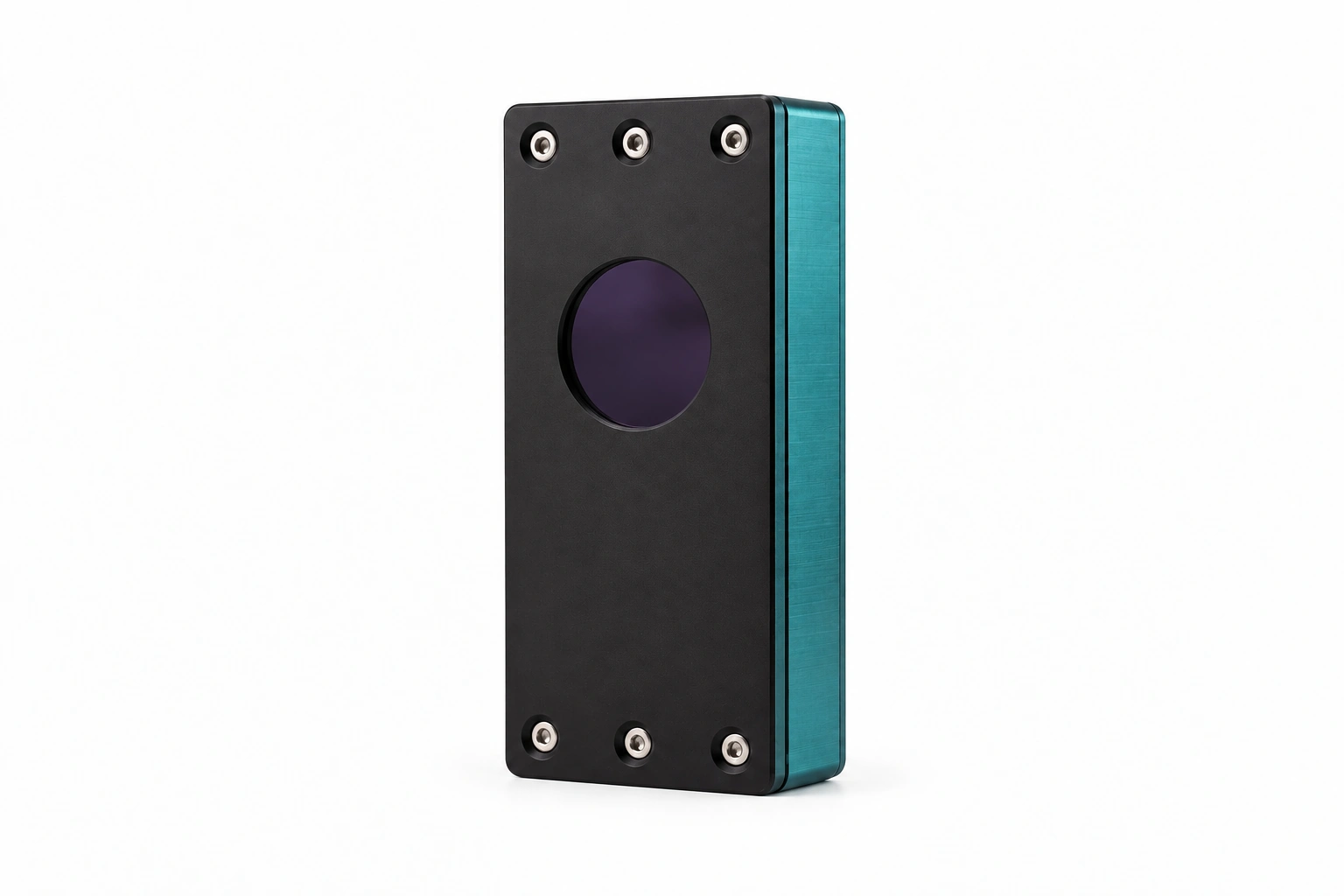
The reference NeuroVLC detector with six faceplate screws and a dark circular IR filter covering its optical aperture
02 / Optical receiver

Optical coverage for your enclosure.

We are targeting single-receiver coverage for a standard enclosure. Larger arenas or more complex layouts may need additional receivers to maintain optical coverage across the animal’s movement. The receiver configuration is matched to the recording area.

23.5 mm H × 45.7 mm W × 102.5 mm L
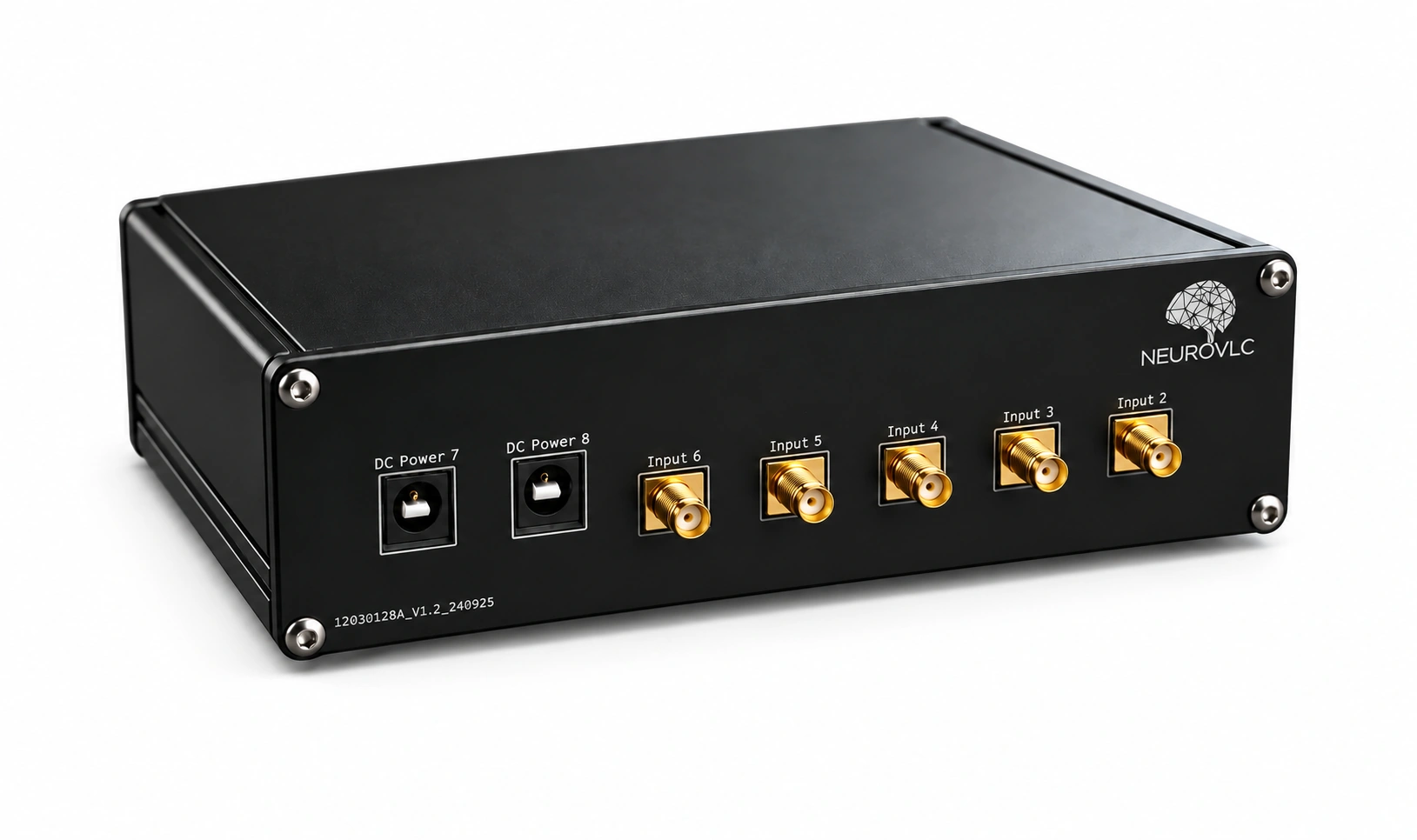
NeuroVLC-branded data acquisition unit with its power and signal connectors clearly visible
03 / Acquisition

From light to usable neural data.

The acquisition unit links the optical receiver to the desktop, for real-time viewing and recording of neural signals.

Start a conversation

What will you
discover next?

Let’s explore what optical wireless recording could make possible for your research.