The technology

A small light source.A wider possibility.

Why optical?

More bandwidth.
Less weight.

Increased data rate

Higher data rates and longer operating time. The current system transmits 15.36 Mbps of neural data, without compression.

Over 75% reduced weight

A lighter interface for freely moving research, with a headmount weighing ≤ 2.5 g.

Light-based transmission

Reduced susceptibility to RF interference and the signal distortions that metal structures can introduce into radio links.

Freely moving experiments

25% reduced cost and time, with untethered recording during natural behaviour.

Follow the signal
The complete recording workflow

Follow the signal.

Explore each stage, from the probe interface to the neural data on your desktop.
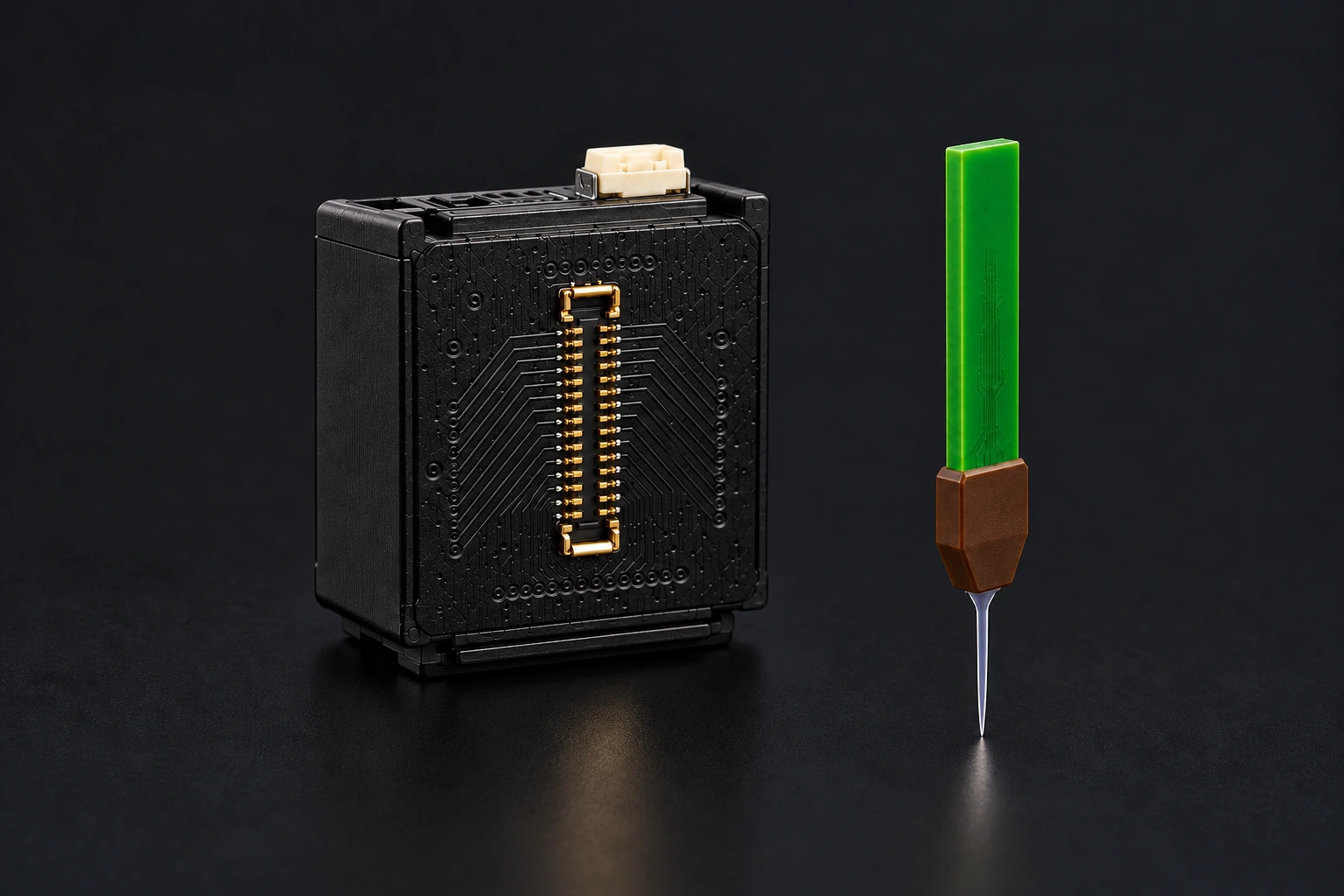
Rear Molex interface and the matching narrow green probe PCB
01 / Connect

Small interface. Complete connection.

The probe and headstage are shown in a gently separated view of the mating interface. In use, the green probe PCB mates to the Molex connector on the rear of the headstage; the electrode shank sits within the brain. The headstage acquires neural activity for uncompressed optical transmission. An Omnetics interface option is also available.

Example probe shown. Sold separately and not manufactured by NeuroVLC.
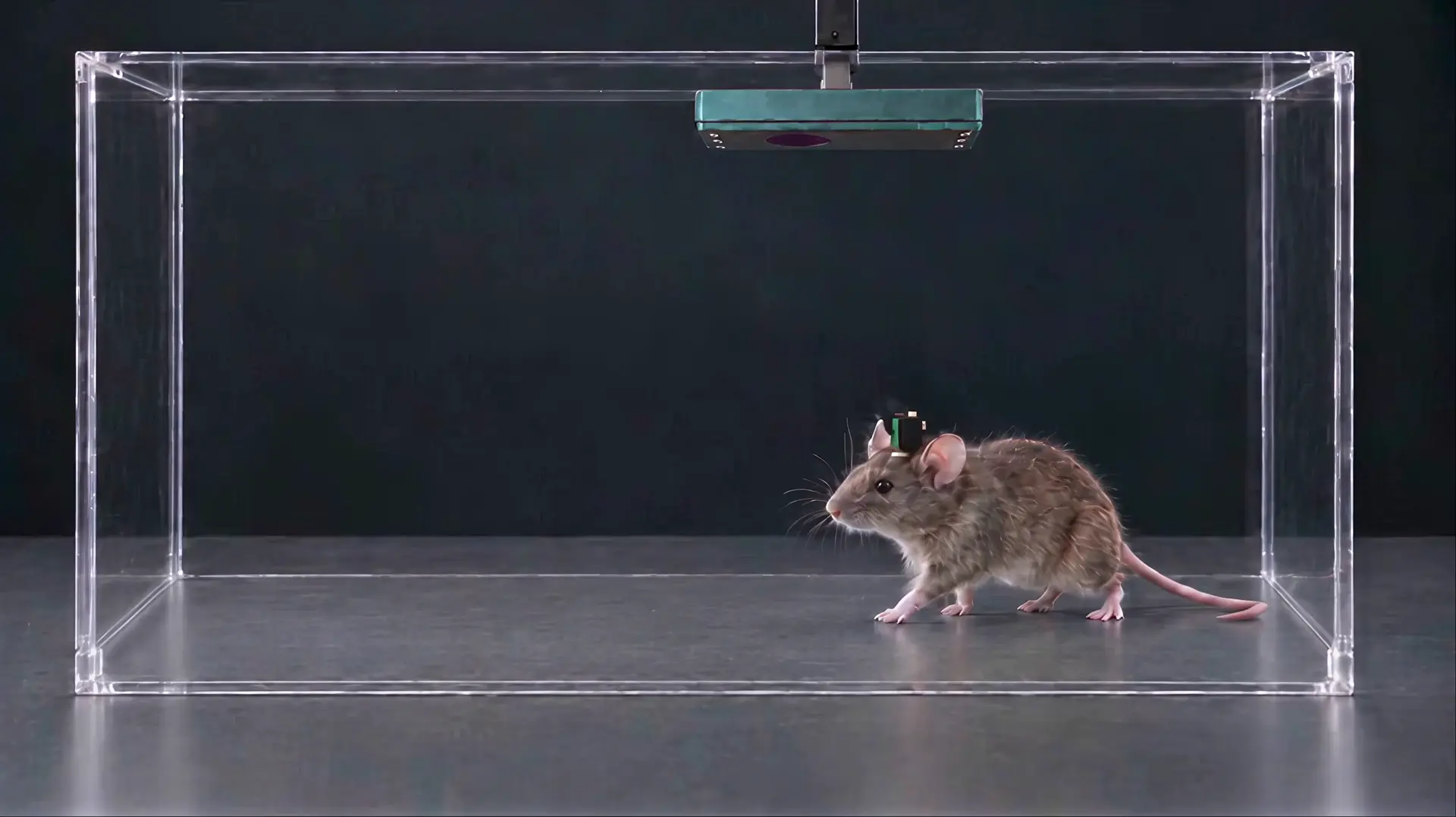
Headstage footprint: 13 mm × 13.5 mm · Connector configuration matched to the probe

Choose your probe interface

MolexThe reference connection shown here.
OmneticsAn alternative interface option, matched to your probe.
Real-time visualisation

See the signal
while it matters.

Live views show signal quality and activity while an experiment is running, with uncompressed data available for deeper analysis.

Interface compatibility

Molex and Omnetics interface options support different probe configurations.

Molex connector information ↗
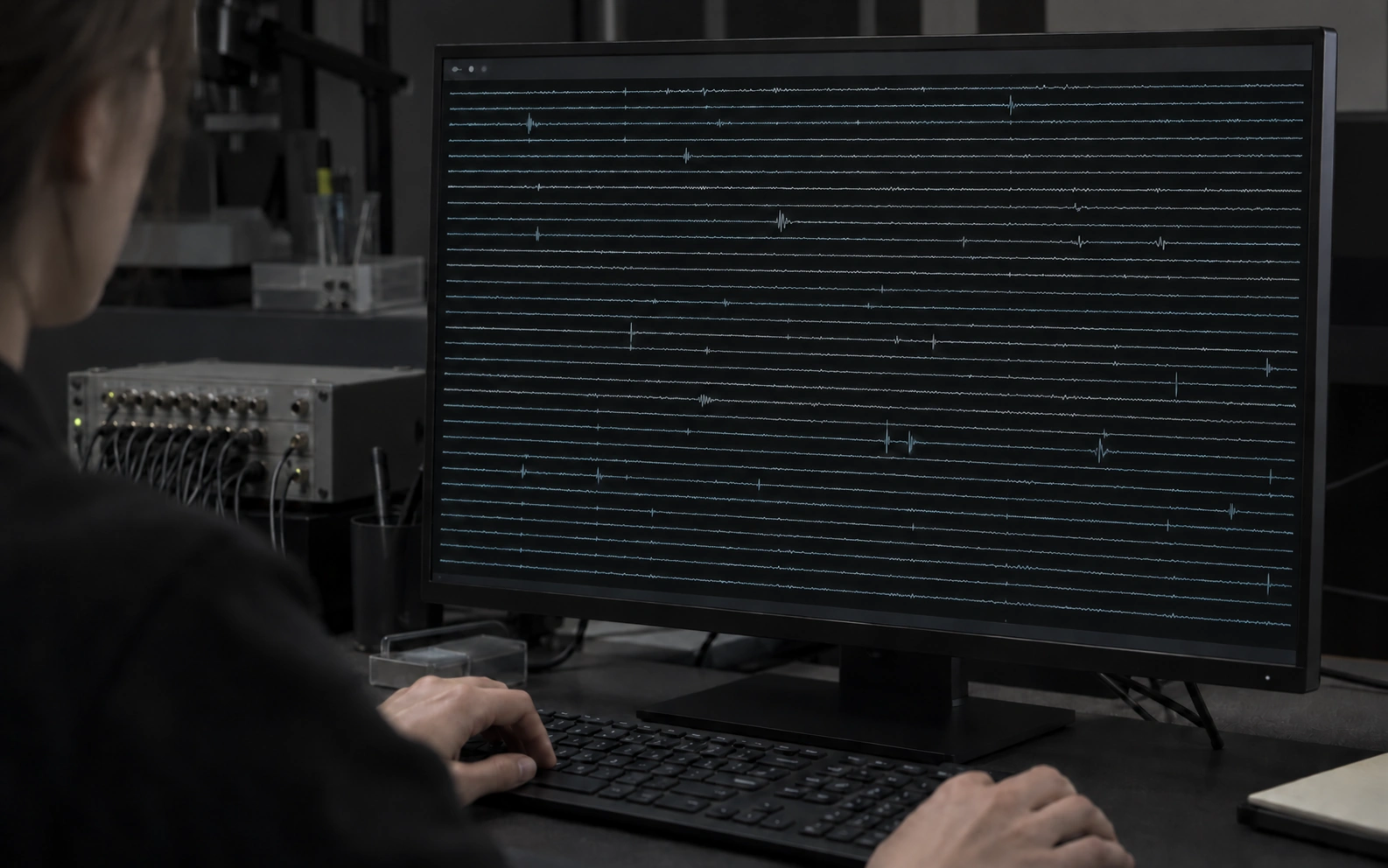
Neural recordings displayed at a laboratory workstation
Room to grow

More bandwidth.
More neural activity to observe.

Optical communication opens a path toward recording from thousands of channels while keeping the neural data uncompressed.

Explore the optical research ↗
NeuroVLC neural data rate
15.36 Mbps
32Recording channels
UncompressedFull acquired neural data

The compact recording platform is the starting point for a wider programme of optical development.

Platform development

A platform built
to keep opening doors.

Today’s optical recording platform is a starting point. Our research is exploring what comes next.

Research direction

More channels

Scaling optical bandwidth toward thousands of channels while preserving broad probe compatibility and uncompressed data.

Research direction

Wireless power

Exploring ways to power neural interfaces without adding a physical tether.

Research direction

Incorporating stimulation

Investigating optogenetic integration alongside neural recording.

Start a conversation

What will you
discover next?

Let’s explore what optical wireless recording could make possible for your research.